Riverside tap water carried an average of 194 mg/L of hardness, about 11 grains per gallon, in the Riverside Public Utilities 2024 Water Quality Report. That is fine to drink. It is a poor thing to pour into a cooling system, and it is one reason some water pumps here die before their time.
We replace water pumps at curbs and in driveways across Riverside, Moreno Valley and Corona. Most people who call us want two things. They want the price, and they want to know the new pump will last. Both answers start with how your engine drives its pump.
Where the Money Goes on a Water Pump Job
The pump is a simple part. A pulley spins a shaft, and the shaft spins an impeller that pushes coolant through the engine, the radiator and the heater core. The part is rarely the expensive piece of the bill.
Our repair cost guides put the pump at $120 to $350 and the labor at 2 to 4 hours. Add coolant, which runs $20 to $50 a gallon for modern long life types, per the same guides. A new thermostat usually goes in too, at $15 to $40 for the part.
| Estimate | Labor | Parts | Total |
|---|---|---|---|
| Kelley Blue Book, national | Not split out | Not split out | $400 to $800 |
| Riverside Mobile Mechanics rates, worked out | $300 to $600 | $140 to $400 | $440 to $1,000 |
| RepairPal, national, no local adjustment | $366 to $536 | $525 to $598 | $891 to $1,135 |
Kelley Blue Book figure from its water pump replacement page. RepairPal figure updated September 3, 2026. Our labor column includes the $150 service call, which covers the first hour.
The Math at Riverside Mobile Mechanics Rates
The pricing page lists three numbers. The service call is $150 flat and covers the trip, the diagnosis and the first hour of labor. Labor after that is $150 an hour in 30 minute steps, and parts are cost plus a standard markup.
Put the 2 to 4 hour labor range from our guides through those rates and you get this worked example.
- Service call, $150. It covers the first hour of the job.
- Extra labor, $150 to $450. That is the second, third and fourth hour, billed in half hour steps.
- Pump and gasket, $120 to $350. A plain belt pump sits at the low end. A European pump with a plastic housing or an electric pump sits at the top.
- Coolant, $20 to $50. The right type for your engine, mixed with distilled water.
- Worked total, $440 to $1,000. Your number comes after someone looks up your engine and where its pump sits.
Add a thermostat while the system is drained, and expect $15 to $40 more in parts. For how labor hours get counted in general, read our guide to how mechanics charge for labor.
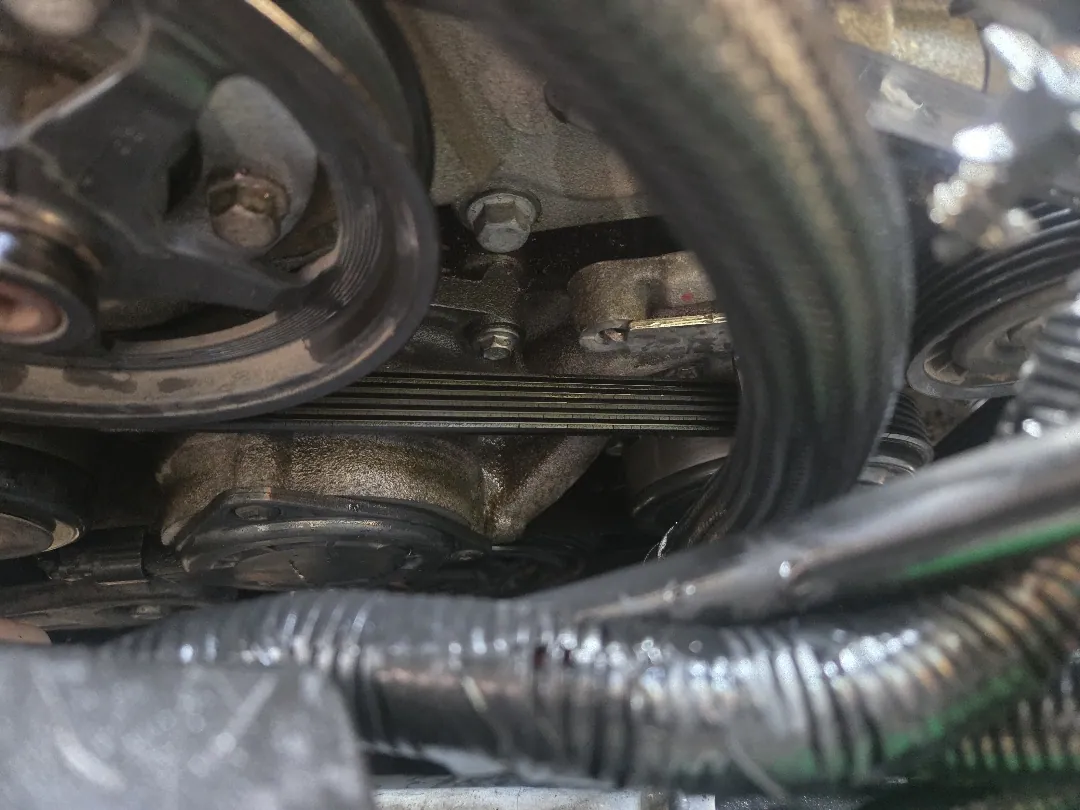
Belt Pump or Timing Cover Pump
Where the pump lives decides most of the price. Two cars with the same size engine can be two labor hours apart on this job, per our repair cost guides.
- Belt driven, outside the engine. Most trucks, many V8 engines and older designs drive the pump off the serpentine belt. The tech pulls the belt and maybe a fan shroud, then unbolts the pump. These land near the low end, and most are good driveway jobs.
- Timing belt driven, behind the cover. Many four cylinder and V6 engines hide the pump behind the timing cover. Reaching it means pulling the accessory belt, often an engine mount, the timing covers and the timing belt itself. These land at the high end or above it.
- Electric pumps. Many hybrids and some European cars use an electric pump. It skips the belt labor, but the part costs more.
On a timing belt engine, do the pump and the belt together. The labor for the two jobs overlaps almost completely, so the pump adds little more than its part price when the belt is already off. Most timing belt intervals fall between 60,000 and 105,000 miles, and a pump usually lasts 60,000 to 100,000 miles, per our guides. Those numbers line up on purpose.
A shop that changes your timing belt and never mentions the pump owes you an explanation. So does a shop that changes the pump and leaves an old, coolant soaked timing belt in place.
7 Signs the Pump Is Going, and How Fast to Act
Every pump has a small weep hole under the shaft. When the inner seal starts to wear, coolant seeps out of that hole first. That seep is the warning you get before the pump quits.
| What You Notice | What It Usually Means | How Soon |
|---|---|---|
| Crusty white or green trails below the pump | The seal is wearing and coolant is drying on the engine | Book it within days |
| A puddle under the front center of the engine | Active leak, often orange, green or pink | Within days, and check the level daily |
| Coolant warning light keeps coming back | The system is losing coolant somewhere | Get a pressure test this week |
| Whine or growl that rises with engine speed | Worn shaft bearing | This week |
| Gauge runs hot at idle or in traffic | The pump may not be moving enough coolant | Stop driving if it nears red |
| Steam or a sweet syrup smell | Coolant hitting hot parts | Pull over and shut it off |
| Heater blows cold while the engine runs hot | Coolant is not circulating | Stop driving now |
Signs and timing from our repair cost guides. A thermostat, a hose or a fan can cause some of the same signs, which is why a pressure test comes before a pump order.
The quiet failure is the impeller. Many pumps use plastic impeller blades, and old coolant slowly eats them. Nothing leaks and nothing makes noise. The pump just moves less coolant, and the first sign is an engine that runs warm.
Treat a climbing gauge as an emergency. Modern heads are aluminum, and aluminum warps fast without coolant flow. Our guides put the jump from a pump job to a head gasket job at $1,500 to $3,000 or more. Pull over, shut the engine off, and never open a hot radiator cap. A tow costs less than a warped head.
Riverside Water and Riverside Heat
Two local facts are hard on a pump here. One comes out of your hose bib. The other comes out of the sky.
The water. The city's 2024 report lists hardness at 180 to 210 mg/L, with a 194 mg/L average. It also notes that 1 grain per gallon equals 17.1 mg/L, so the average is about 11 grains. Hardness is calcium and magnesium. Heat a cooling system full of it for a few summers and those minerals can drop out as scale.
BluePrint Engines, a crate engine builder, says tap water minerals can build up inside the cooling system. It names scale as one result and lists water pumps among the parts distilled water helps protect.
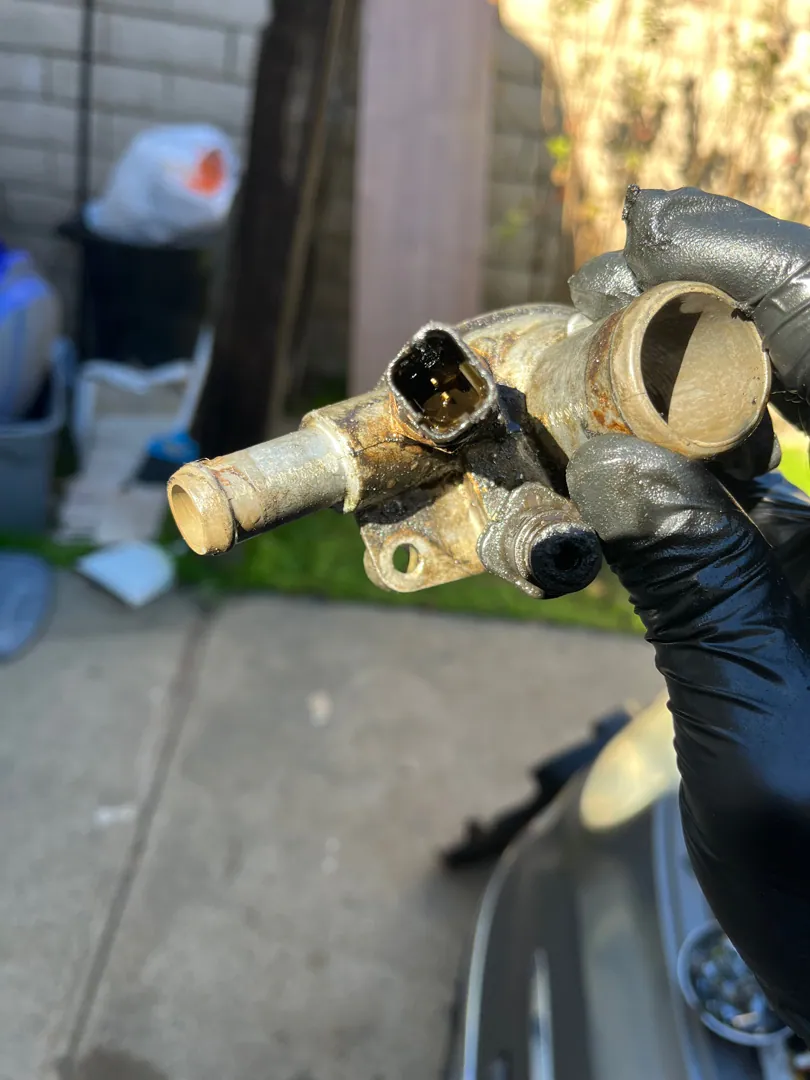
Gates, which makes water pumps, explains how the damage happens in its tech tip TT002-13. Worn out coolant leads to corrosion, rust and scale. Particles as small as 50 microns get trapped in the pump seal and open a path for coolant to leak out the weep hole. Bad enough damage lets fluid reach the bearings, and the bearing fails.
So do not top off with a garden hose. Buy premixed coolant of the right type, or mix concentrate with a gallon of distilled water from the grocery store. That gallon costs less than the coolant it protects.
The heat. The Western Regional Climate Center record for Riverside Fire Station 3 puts the average high at 94.2°F in July and 94.4°F in August. September still averages 90.9°F. A slow crawl on the 91 at 3 pm is when a weak pump shows itself. If your gauge creeps up in traffic and settles on the open road, have the system tested before next summer.
What a Proper Job Includes
A cheap pump job and a good one can look the same on the invoice. The difference shows up 10,000 miles later. Ask for these items by name.
- A pressure test first. It proves the leak is the pump and not a hose or the radiator.
- A flush with the old pump still on. Gates says to flush before the new pump goes in, since flushing after can push particles into the new seal.
- A new gasket or O ring. The old seal never goes back on.
- A named pump brand. Our guides warn that a $40 no name pump that fails at 20,000 miles means paying the full labor again.
- The right coolant type. Gates notes that the main coolant families in use today do not mix, and topping off with the wrong one can start corrosion.
- An air bleed. An air pocket left after the refill can overheat the engine by itself. Many engines need bleed screws or a vacuum fill tool.
- The timing parts, if the pump sits behind the cover. Belt, tensioner and idlers, unless they were done recently.
California backs you up on the paperwork. The Bureau of Automotive Repair says the estimate must describe the specific job and list the estimated cost of all parts and labor. The shop must get your OK, and note it on the work order and invoice, before any added repairs or charges.
The invoice must list each part as new, used, rebuilt or reconditioned. Ask for your old pump back when you approve the estimate. Pumps sold on a core exchange are an exception, but you still get the chance to look at it. For the warning signs of a shop that skips these steps, read how to spot a dishonest mechanic.