We work on a lot of cars in Riverside driveways, and from May to October one call beats all the others. The fan blows, the light on the button is on, and the air coming out of the vents is warm. Sometimes it is hotter than the air outside.
Most guides hand you a list of seven causes and wish you luck. This one starts with a five minute test you can do in your own driveway, then tells you what each cause usually costs to fix. Cheap checks come first.
The 5 Minute Driveway Test
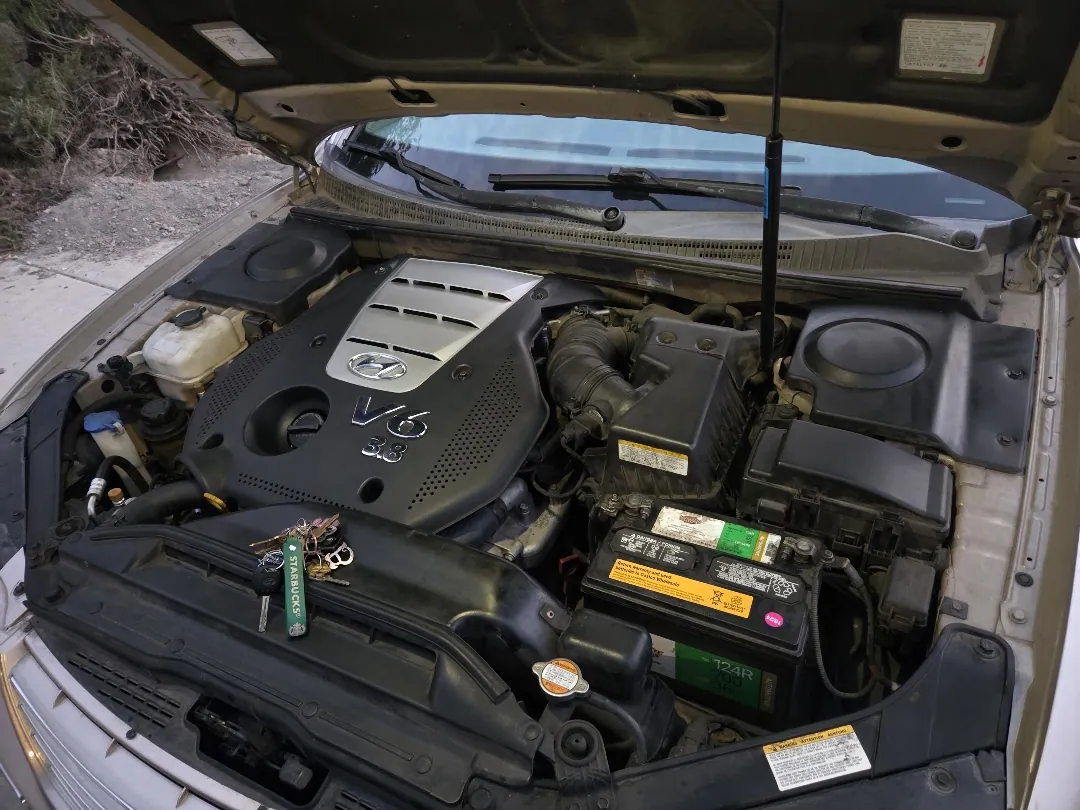
You need the engine running, the hood up and a phone flashlight. Keep your hands, hair and sleeves away from the belt and the fan. They can start on their own.
- Set it to full cold. AC on, temperature all the way down, fan on high, recirculate on. Give it two minutes.
- Feel the vent, then the air outside. Is the vent air cooler than outside, the same, or hotter? Hotter matters most. That points away from refrigerant and toward the dash.
- Listen for the click. On many cars you hear a click under the hood a few seconds after you press the AC button. That is the compressor clutch grabbing. Look at the front of the compressor pulley. The center plate should spin with the pulley. If it sits still, the compressor is not being told to run, or it cannot.
- Look behind the grille. On most cars an electric fan should run when the AC is on. No fan means the AC has no way to dump its heat.
- Drive it. If the air turns cold on the freeway and warm again at a red light, that is a big clue. Airflow from driving is doing the fan's job.
- Pull the cabin filter. It sits behind the glove box on most cars. If it is black and packed with leaves, you found at least one problem.
Write down what you saw. A good mechanic will ask you every one of these questions, and your answers can cut the diagnosis time.
What the Air Is Telling You
Match what you felt to the closest row. This is where the warm air usually comes from.
| What You Notice | Most Likely Cause | Next Step |
|---|---|---|
| Air is hotter than outside, even on full cold | Blend door or its motor stuck on heat | Listen for clicking behind the dash. The door is not mixing in cold air. |
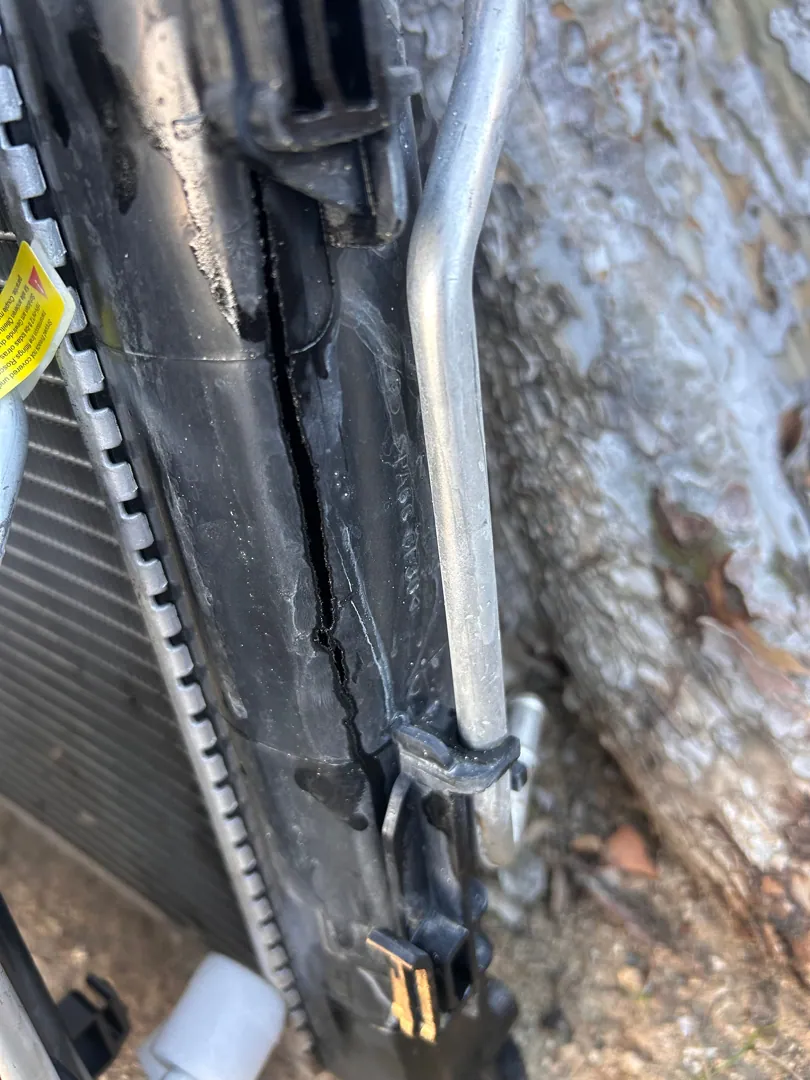
| Cold on the freeway, warm at stoplights | Condenser fan not running, or a dirty condenser | Check the fan with the AC on. Look for bugs and dirt packed in the front fins. |
| Got a little warmer every week | Slow leak, low refrigerant | Get a leak test. Adding more only refills the leak. |
| Went warm all at once, with a squeal or a bang | Compressor, clutch or belt | Turn the AC off and get it looked at soon. |
| Weak air on every fan speed | Clogged cabin filter or a tired blower | Change the filter first. It is the cheapest fix there is. |
| Cold on one side, warm on the other | One blend motor in a dual zone system, or low charge | Swap the zone settings and see if the warm side moves. |
| Cold, then warm after a long drive, then cold again | The system icing up inside the dash | Needs a scan of the sensors and a pressure check. |
| Warm air and the temp gauge is climbing | The engine is running hot | Many cars cut the AC to protect the engine. Fix the cooling system first. |
The 9 Causes, Cheapest Fix First
Every common cause is listed in order of what it usually costs. Check the cheap ones before anyone sells you a compressor.
- 1. A blown fuse or a bad relay. The compressor clutch runs on a fuse and a relay. One dead part and the compressor never kicks on, even with a full charge. This is a few dollars in parts.
- 2. A clogged cabin air filter. It chokes the air before it reaches you. The air may still be cool at the vent, just weak. In a dusty summer or a smoke season, these clog fast.
- 3. A blend door or blend door motor. A small door behind the dash mixes hot and cold air. If its motor dies on the heat side, you get heater air in July. A steady clicking behind the glove box is the classic sign.
- 4. The condenser fan. The condenser is like a second radiator in front of the real one. At highway speed, wind cools it. At a light, only the fan can. A dead fan, a bad fan relay or a broken wire gives you warm air every time you stop.
- 5. A dirty or damaged condenser. Bugs, dirt and bent fins block the air. A rock from the freeway can also punch a hole in it, and then it leaks.
- 6. Low refrigerant from a leak. This is the one most people think of first. The system is sealed, so low refrigerant means it is leaking somewhere. Hoses, seals, the condenser and the evaporator inside the dash all can leak.
- 7. A pressure switch or sensor. The car watches system pressure and shuts the compressor off if it reads too low or too high. A bad switch can shut down a healthy system.
- 8. A clogged expansion valve or orifice tube. This part meters refrigerant into the evaporator. When it sticks, the cooling falls apart. Debris from a failing compressor often ends up here.
- 9. The compressor or its clutch. The compressor is the pump that moves refrigerant around. When it fails, it is the biggest bill on this list, and a failed one can send metal through the whole system.
What Each Fix Costs in Riverside
This is how we price it, so you can do the math yourself. Our service call is $150 flat. It covers the trip to you, the full diagnosis and the first hour of labor. After that, labor is $150 an hour in 30 minute steps, and parts are cost plus a standard markup. That is all on our pricing page.
The table below is a worked example for a typical car. The part ranges and labor hours are estimates from our network's repair cost guides, not quotes. Your real number comes after the diagnosis.
| Repair | Parts | Labor Hours | Worked Total |
|---|---|---|---|
| Cabin air filter | $15 to $45 | 0.2 to 0.4 | $165 to $195 |
| Recharge after a leak fix | $45 to $200 | 1 to 1.5 | $195 to $425 |
| Blend door motor | $45 to $200 | 1 to 3.5 | $195 to $725 |
| Condenser | $180 to $550 | 2 to 4 | $480 to $1,150 |
| Compressor | $350 to $800 | 2.5 to 4 | $725 to $1,400 |
Worked total is the $150 service call, plus labor past the first hour at $150 an hour, plus the part range. A condenser or compressor job also means pulling the refrigerant out and charging it again. Ask if your quote includes that, and what refrigerant your car takes.
Two things push a bill up. A newer car on R-1234yf costs more to charge than an older R-134a car. And a compressor that came apart inside can mean flushing lines and swapping the expansion valve too. Ask the shop to show you the debris before you pay for the extra parts. Want to know how hours get billed? Our guide on how mechanics charge for labor breaks it down.
Why a Can From the Parts Store Is a Gamble
A recharge can looks like a $50 fix. Sometimes it works for a while. Then the catch shows up.
- A low system is a leaking system. If it leaked once, it will leak again. The can buys you days or weeks, not a fix.
- Too much is as bad as too little. The system needs the right weight of refrigerant. A gauge on a can only reads one side of the system, so overfilling is easy, and an overfilled system can blow warm too.
- Your car may not even take it. HFO-1234yf is now used in the majority of light duty vehicles, per the EPA's refrigerant page. Those systems must use their own unique fittings under SAE J639, so an R-134a can is not made to connect. Check the sticker under your hood.
- California has its own rules for the cans. The California Air Resources Board requires a self sealing valve on DIY cans of high warming refrigerant, from just over two ounces up to two pounds. The rule started January 1, 2010. The old $10 can deposit ended January 1, 2025.
- What leaks out does real harm. CARB says the R-134a in one 12 ounce can equals the carbon dioxide from burning 150 gallons of gasoline. The EPA puts R-134a at 1,430 times the warming power of carbon dioxide.
Anyone who fixes car AC for pay must be trained and certified under Section 609 of the Clean Air Act and use approved equipment, per the EPA. That machine pulls the old refrigerant out, checks for leaks under vacuum and puts back the exact weight your car calls for. No can does that.
Riverside Heat Makes Every Weak Spot Show
Riverside is hard on car AC. The Western Regional Climate Center's long record for the Riverside Fire Station 3 weather station puts the average high at 94.2°F in July and 94.4°F in August. Even October averages 82.9°F. That is six months a year with an average high of 80°F or more.
Heat matters because the condenser has to throw heat into the outside air. When that air is 95°F and you are sitting on the 91 in traffic, a system that is a little low or a fan that is a little slow gives up first. That is why so many cars cool fine in April and fail in July.
A weak AC also costs you gas. Under very hot conditions, AC use can cut a regular car's fuel economy by more than 25%, mostly on short trips, per fueleconomy.gov. The same page gives a few free tips that also go easy on your AC.
- Roll the windows down for a minute first to let the hot air out.
- Do not idle with the AC on before you leave. Most systems cool faster once you drive.
- Park in shade or use a sunshade.
- Windows down at low speeds, AC at freeway speeds.
What the Cause Lists Skip
For this question in Riverside you will find a Reddit thread, a tire chain's list from July 2024, a parts store guide and two dealer pages, one of them in Texas. The tire chain and dealer pages list the same causes in a different order, and none of them put a price on a single fix.
They also skip the part that saves you money. Warm air hotter than outside is almost never refrigerant. Cold on the freeway but warm at idle is almost never the compressor. Those two clues alone can keep you from buying a recharge you do not need. And none of them told a California driver about the can rules or the newer refrigerant.
Our take is simple. Do the driveway test, check the fuse and the filter, and if it still blows warm, pay for one real diagnosis before you pay for parts.