In Riverside, a bad oxygen sensor rarely leaves you stuck on the side of the 91. It leaves you stuck at the smog station. The Bureau of Automotive Repair says a car will not pass a Smog Check with the check engine light on. A failed oxygen sensor is one thing that can keep that light on.
We replace oxygen sensors at curbs and in driveways across Riverside, Moreno Valley and Corona. The part is small, and the job is often quick. What changes the bill is which sensor failed, why it failed, and whether someone else should be paying for it.
What One Sensor Costs in Riverside
An oxygen sensor screws into the exhaust and reads how much oxygen is left after the fuel burns. The engine computer uses that reading to trim the fuel mix many times a second. When the reading goes wrong, the fuel mix goes wrong with it.
National estimates for one sensor land in a narrow band. Both of them put most of the money in the part.
| Estimate | Labor | Parts | Total |
|---|---|---|---|
| Synchrony, national average | $63 to $79 | $300 to $333 | $362 to $412 |
| RepairPal, national, no local adjustment | $93 to $136 | $347 to $387 | $440 to $523 |
| Riverside Mobile Mechanics rates, worked out | $150, first hour included | $50 to $390 | $200 to $540 |
Synchrony figure from its O2 sensor cost page, updated September 18, 2024. RepairPal figure updated September 3, 2026, and RepairPal recommends original equipment parts. Our row is a worked example from the next section, not a quote.
The Math at Riverside Mobile Mechanics Rates
The pricing page lists three numbers. The service call is $150 flat and covers the trip, the diagnosis and the first hour of labor. Labor after that is $150 an hour in 30 minute steps, and parts are cost plus a standard markup.
Both national estimates above put labor at well under one shop hour. So on most cars, the whole swap fits inside the hour the service call already pays for.
- Service call, $150. It covers the code scan, the testing and the first hour of the job.
- The sensor, about $50 to $390. A heated four wire sensor was listed at $49.99 in the CarParts.com O2 sensor guide. RepairPal puts original equipment parts at up to $387.
- Extra time, $0 to $75 or more. A sensor rusted into an old exhaust can need heat and patience. Each half hour past the first hour adds $75.
- Worked total, about $200 to $540. Your number comes after someone looks up your engine and which sensor failed.
A second sensor adds its own part price, plus any time past that first hour. For how labor hours get counted in general, read our guide to how mechanics charge for labor.
Upstream or Downstream Changes the Answer
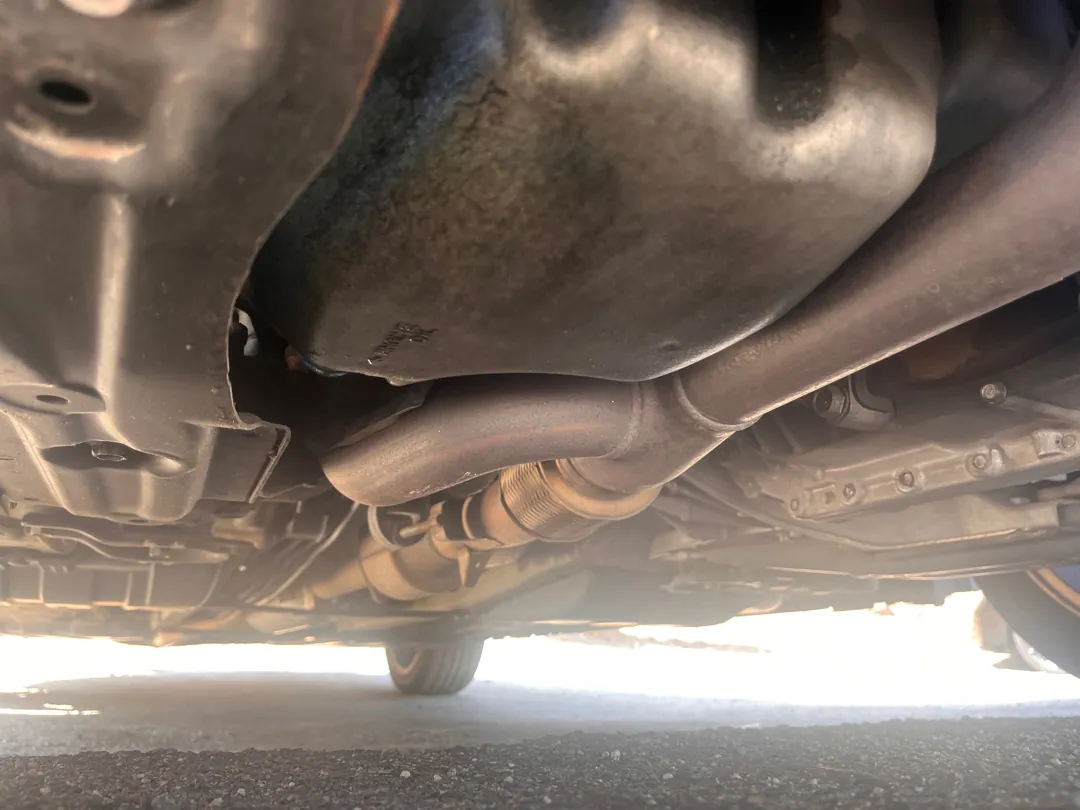
Most modern cars have one sensor ahead of the catalytic converter and one after it on each exhaust bank. A V6 or V8 has two banks, so it can have four. The scan tool names each one by bank and position.
- Sensor 1, upstream. It sits before the catalytic converter and controls the fuel mix. Walker Products, which makes sensors, calls this the control sensor. A bad one can swing the mix rich or lean and cost you fuel.
- Sensor 2, downstream. It sits after the converter. Walker says these diagnostic sensors only watch the exhaust leaving the converter, so they do not cause that fuel swing.
That split matters for your wallet. A failed upstream sensor is hurting the engine and your mileage today, so fix it soon. A failed downstream sensor mostly costs you the check engine light, which in California still means a failed smog test.
Walker also warns that a bad sensor can ultimately damage the catalytic converter. A converter costs many times what a sensor does, so a long run on a sensor stuck rich is a poor bet.
Read the Codes Before You Buy a Sensor
A code that names an oxygen sensor does not always mean the sensor is dead. Walker says repeat sensor codes are often caused by exhaust leaks, wiring or connector damage, or fuel trim and engine problems. It also says heater circuit trouble is a common source of codes.
Every modern sensor has a small heater inside so it starts reading soon after a cold start. That heater has its own power feed, ground and fuse. When the heater circuit fails, the code says heater, and the fault can sit anywhere along that wiring.
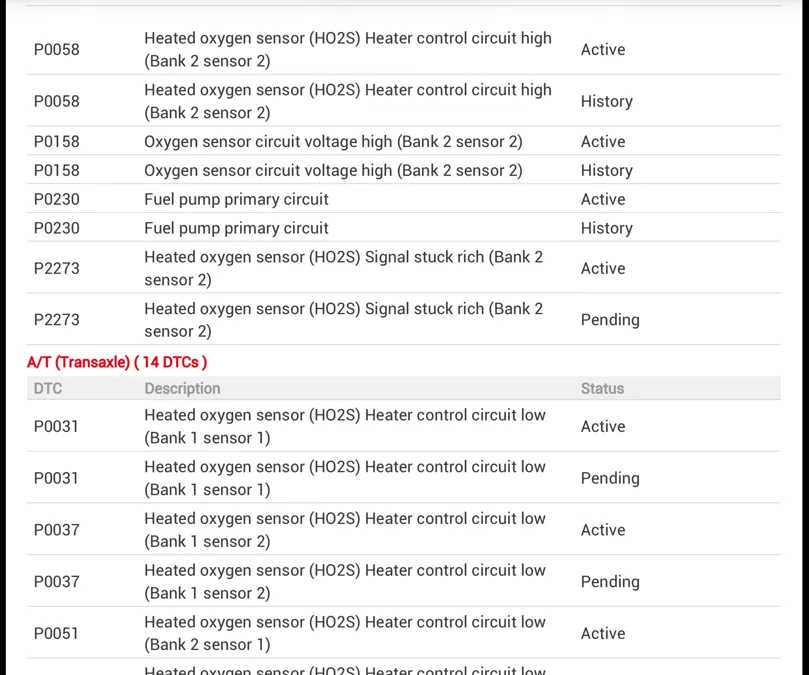
Look at that report. Four sensors do not usually fail on the same day. When heater codes land on every sensor at once, test what they share first, like a fuse, a relay or a power feed. That test costs far less than four sensors at up to $387 each.
A good diagnosis checks three things before a part is ordered.
- The live data. An upstream sensor should switch quickly between rich and lean. Walker gives the swing as under 150 mV lean and over 750 mV rich.
- The heater circuit. Power, ground and resistance at the connector, compared with the spec for your car.
- The exhaust and the engine. An exhaust leak ahead of the sensor, a misfire or a fuel problem can all make a good sensor report bad numbers.
Our service call includes that work. If the sensor tests fine, you should hear that before anything gets replaced. Our diagnostic service covers the same scan and live data testing at your curb.
The Smog Check Problem in Riverside
The California DMV exempts gas cars less than eight model years old from a smog inspection. After that, the test comes with registration renewal, and the check engine light decides a lot of it.
BAR is plain about two points. A car will not pass with the light on. And if you recently disconnected or replaced your battery, drive for a week or two so the readiness monitors reset before the test. Clearing codes after a repair wipes the same self tests, so give a new sensor that same week or two before you go back.
| Your Situation | What to Do |
|---|---|
| Light on, smog due soon | Get the code read and tested now. Leave time to drive the car before the test. |
| Just failed smog for the light | Check the warranty and the state help program below before you pay anyone. |
| Sensor replaced last week | Drive normally for a week or two, then test. Do not clear codes on the way to the station. |
| Light came back after the repair | The cause is still there. Look at wiring, leaks and the engine before a second sensor. |
The state may pay. BAR's Consumer Assistance Program can put up to $1,450 toward emissions repairs on a 1996 or newer car, and up to $1,100 on a 1976 to 1995 car. The rules are strict.
- The car must have failed its every other year Smog Check first.
- Gross household income must be at or below 225 percent of the federal poverty level.
- You must be the registered owner, and you pay a co payment.
- The work must be done at a STAR test and repair station, and only after you get the letter of eligibility. BAR will not pay you back for repairs done before that letter.
So if you think you qualify, apply before you book any repair, including with us.
Check the California Emissions Warranty First
California law makes the carmaker stand behind emissions parts longer than most drivers know. Under Title 13, section 2037, which applies to 1990 and newer cars and light trucks, the maker warrants against defects for 3 years or 50,000 miles. The rule says that includes any defect that would turn on the check engine light.
A second tier covers parts the maker lists as high priced for 7 years or 70,000 miles. Each maker names its own list in the warranty booklet, so read yours before you pay for any emissions part.
The catch for Riverside drivers is timing. Your first smog test usually comes after eight model years, and the 3 year coverage is long gone by then. So the warranty helps most when the light comes on early, between smog tests. If your car is under 3 years and 50,000 miles and a sensor fails, call the dealer first. That repair should cost you nothing.
Why New Sensors Die Early
Walker puts the usual life of an oxygen sensor at 60,000 to 100,000 miles. Some die far sooner, and the reason is almost always something the engine is feeding them.
| What the Old Sensor Looks Like | Likely Cause | Fix Before the New Sensor |
|---|---|---|
| Greenish, grainy crust | Coolant getting into the cylinders | Check the head gasket, head and intake gasket |
| Black and oily | The engine is burning oil | Find the oil use, often valve seals or guides |
| Dark brown or sooty | Fuel mix running rich | Check fuel pressure and injectors |
| White or chalky tip | Silicone sealant or fuel additives | Use sensor safe sealant and skip the additives |
| Cut or melted wire | Road debris or a pulled harness | Route the new wire without tension |
Signs and causes from the Bosch Oxygen Sensor Tech Tips sheet and the Walker Products troubleshooting guide.
Two install details from Bosch's tech tips also matter. Its sensors come with anti seize already on the threads, and Bosch says not to add more, because it can reach the sensing tip. It also says not to put dielectric grease in the connector, since its sensors draw reference air through the harness.
Ask for the old sensor back when you approve the estimate. California's Write It Right rules make the shop list each part as new, used or rebuilt, and the old sensor tells you whether something upstream is still killing them. For the other paperwork a good shop gives you, read how to spot a dishonest mechanic.