California Vehicle Code section 21710 says you may not coast down a grade with the car in neutral. That old rule changes how a CVT driver should get down Cajon Pass or the Badlands grade on the 60. Neutral is out, and dragging the brakes for miles is hard on them. Manual mode is the tool your CVT gives you for that exact job.
So yes, you can shift a CVT by hand. What you are shifting is not what most drivers picture, and knowing the difference tells you when the paddles help and when they do nothing at all. We wrote this for anyone with a Nissan, Toyota, Subaru, Honda or other CVT car in the driveway.
What You Are Really Shifting
A regular automatic has a set of fixed gears. A CVT does not. Nissan says its CVTs send power through two pulleys that change size and a steel belt or chain between them, with no fixed gear ratios at all. As the pulleys change size, the ratio slides smoothly from low to high.
Manual mode picks spots on that slide and holds them. Each "gear" you click into is a preset ratio stored in the computer. Nissan's 2024 X-Trail owner's manual lists eight of them, named 1M through 8M.
| Transmission | Manual Steps | Any Real Gears? |
|---|---|---|
| Nissan CVT in the 2024 X-Trail | 8, from 1M to 8M | No. Every step is a held belt ratio. |
| Toyota Direct Shift CVT | 10 simulated ratios on the paddles | One launch gear, used only to pull away from a stop |
| Most other CVTs | Varies by model and trim | Check the owner's manual for your car |
The Nissan row comes from the 2024 X-Trail owner's manual. The Toyota row comes from Toyota Canada and from Aisin, the parts maker that builds the unit.
Toyota adds a twist. Toyota Canada says its Direct Shift CVT borrows one part from a regular transmission, a real first gear. That launch gear helps the car pull away from a stop, then lets go so the belt takes over. Aisin bills the starting gear as a world first for a CVT.
Toyota also changed the belt itself. Its TNGA powertrain page says the belt angle went from 11 degrees to 9 degrees, which Toyota ties to 20 percent faster shifts. That is why a newer Toyota feels quicker on the paddles than an older CVT.
Even in plain D, many CVTs fake their shifts. Nissan says all of its current CVT models use D-Step Logic Control, software that reads your speed and pedal so the revs build with a crisp shift feel. So a stepped feel in D is not a fault. It is the software doing its job.
How to Find Manual Mode on Your Car
Makers label it in different ways, and some cars do not have it at all. Start at the shifter, then look behind the steering wheel.
| What You See | What It Usually Means |
|---|---|
| M, or a plus and minus gate beside D | Full manual mode. You pick the step and the car holds it. |
| Paddles behind the steering wheel | Pull the right one to go up and the left one to go down. On Nissan's X-Trail, one pull in D gives a short hold that returns to D by itself. |
| S or Ds | A sport setting. On the X-Trail, using the paddles in Ds puts the car into full manual mode. |
| L | A low range for steep hills and engine braking, with no steps to click through. |
| Only P, R, N and D | No manual mode. The computer picks every ratio. |
- Move the lever to the manual gate or pull a paddle. You can do this while moving. You do not need to stop first.
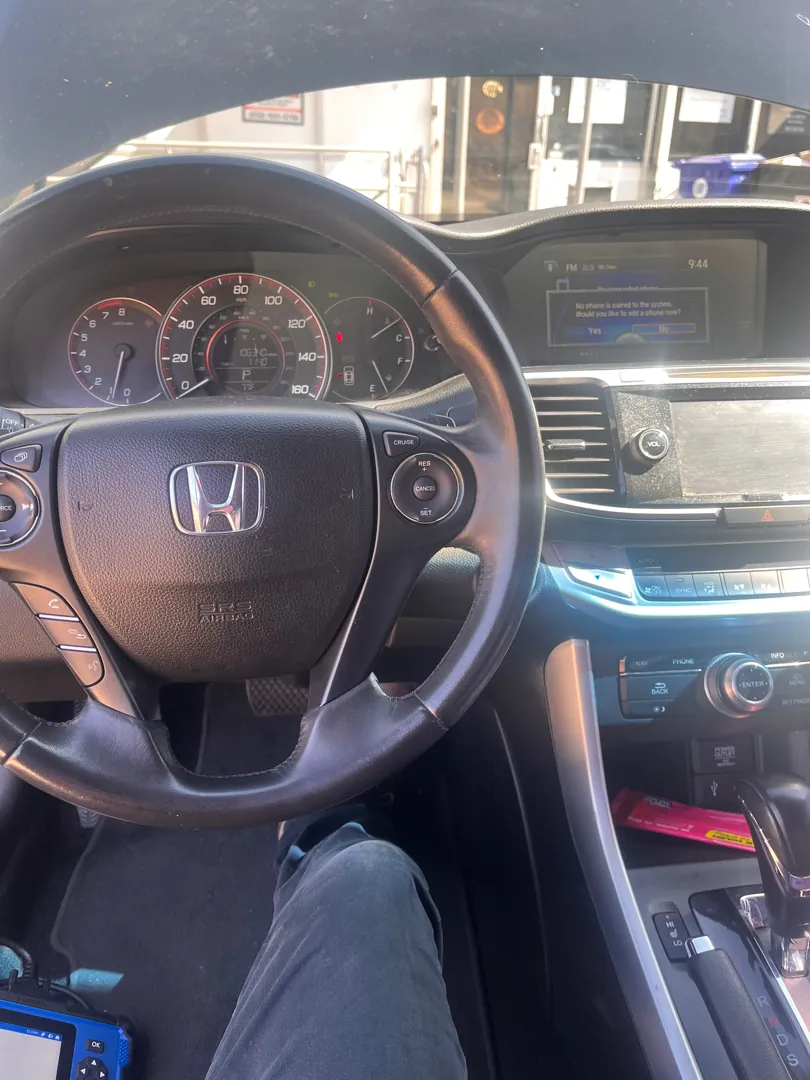
- Watch the dash. The display shows the step you are in, such as 4M.
- Click one step at a time. Nissan notes that a quick double pull may not finish the second shift.
- Go back to D when you are done. Move the lever back to D. On the X-Trail you can also hold a paddle for about 1.5 seconds.
Every maker does this a little differently, so your own owner's manual wins if it says something else. There is no clutch pedal and no need to lift off the gas between steps. The computer changes the ratio for you.
Where Manual Mode Earns Its Keep Around Riverside
Nissan's manual gives a plain guide to which step fits which job. The pattern holds for most CVT cars, even when the step names differ.
| Step on the X-Trail | What Nissan Suggests It For |
|---|---|
| 8M | Normal driving at highway speeds |
| 5M to 7M | Long climbs, and engine braking on long downhill runs |
| 2M to 4M | Hill climbing, and engine braking on downhill grades |
| 1M | Slow climbs of steep hills, slow driving in deep snow, and the most engine braking on steep descents |
Long downhills. This is the job manual mode does best. The 15 coming down Cajon Pass, the 60 dropping off the Badlands toward Moreno Valley, and Ortega Highway down to Lake Elsinore are all long runs. Click down a step or two before the road tips down, not halfway through the drop. Pick a step that holds your speed with light, short brake presses. If the car still gains speed, go down one more.
Neutral is not a choice. Section 21710 bars coasting down a grade in neutral on any California highway. A lower step keeps the car in gear, keeps you legal, and lets the engine do some of the slowing.
Long climbs and loads. Nissan lists the middle steps for long uphill runs. Holding one keeps the revs steady while you climb toward Beaumont or pull a small trailer, instead of the ratio sliding around with every bump in the pedal.
Mountain trips. Nissan lists 1M for slow driving in deep snow. That matters on a winter run up to Big Bear or Idyllwild, where you want slow, steady wheel speed more than power.
When to Leave It in D
Most of the time, D is the better choice. Toyota Canada says a CVT lets the engine spend more time at lower, steadier revs. Holding a fixed step on a flat commute gives up the very thing a CVT does well.
- Freeway cruising. Nissan warns against driving at high speed for a long time in a step lower than 8th, since it cuts fuel economy.
- Hot afternoons. Nissan says that when the CVT fluid is hot, upshifts may come at lower rpm than usual, and that this is not a fault. On a summer afternoon in Riverside traffic, an early upshift in manual mode can be the car guarding hot fluid.
- Cold starts. At a very low fluid temperature, Nissan says the car stays in automatic even if you pick manual. It frees up once the fluid warms.
- Town driving. Stop and go traffic is where the computer beats you. Nissan's manual says the car steps down by itself as it slows and reaches 1st before it stops.
Paddles Rarely Hurt a CVT, but Heat and Fluid Do
A common worry online is that the paddles wear out the belt. The manual tells a different story. Nissan says the car may refuse the step you pick to protect performance and lower the risk of damage or loss of control. When that happens, the indicator blinks and a chime sounds. The car can also shift up on its own if the engine speed gets too high.
So clicking the paddles is a poor way to break a CVT. The computer has the final say on every shift. Heat and the wrong fluid are much better at it.
Nissan says to use only its NS-3 CVT fluid or an equal, and warns that regular automatic transmission fluid may damage the CVT. It also suggests a dealer for any check or change of that fluid. If someone offers to top off your CVT with a generic bottle, stop them. Our guide to what a transmission flush costs covers when a fluid service helps and when it does not.
The usual advice calls CVT paddles a gimmick. On a flat drive to work, that is close to true. On a long downgrade, they are the one control that keeps you off the brakes and inside the law at the same time.
When the Shifting Feels Wrong
Some odd behavior is normal, and some is a sign the transmission needs a look. Sort what you feel before you worry.
- Normal. A blink and a chime when the car refuses a step. An early upshift on a hot day. Manual mode that will not engage on a very cold start.
- Get it checked. A whine that rises with speed, a shudder when you pull away, revs that climb while the car does not speed up, or a warning light on the dash.
- Stop and call. A burning smell, fluid on the ground, or a car that will not move in D or R.
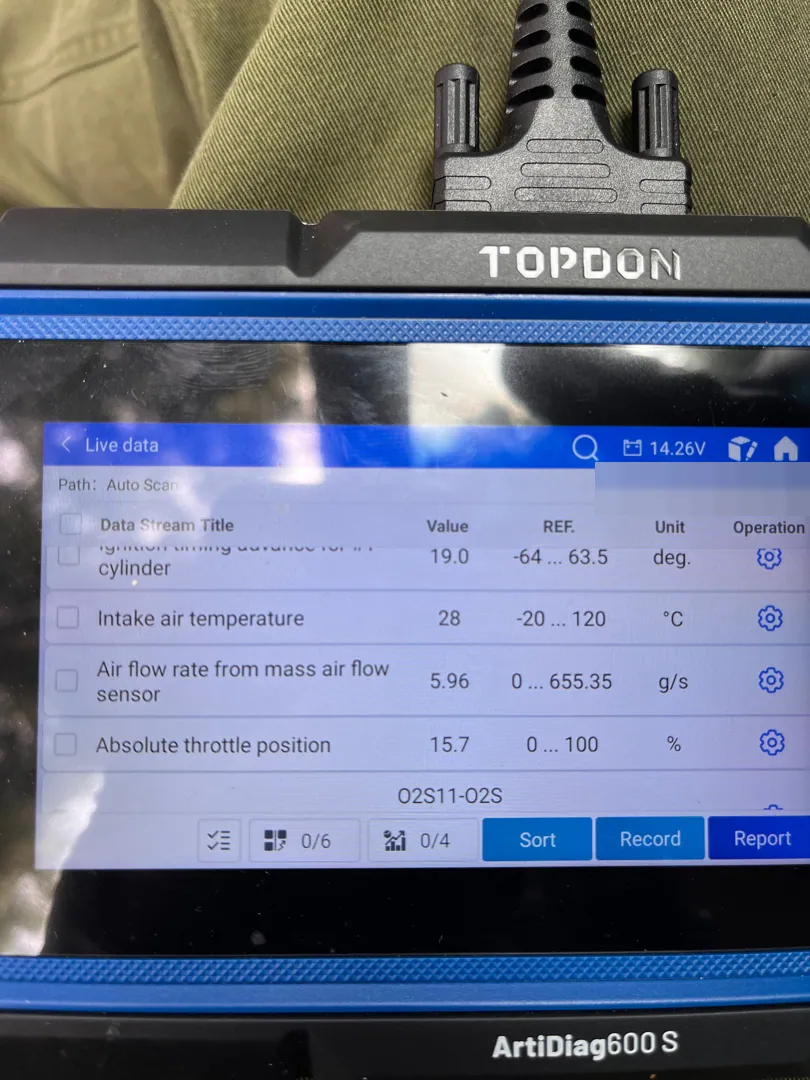
If the car is slipping or showing a light, read whether you can drive with a bad transmission before you take it anywhere. A short, gentle trip is fine for some symptoms, and a tow is the only choice for others.